
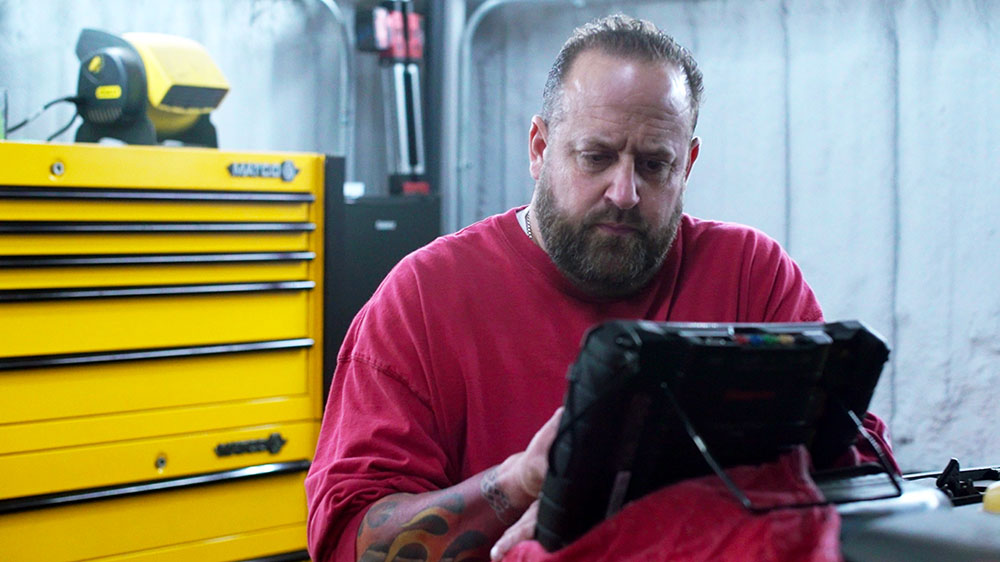
When your check engine light comes on, your car is telling you that its onboard computer found a problem it cannot fix on its own. Check engine light diagnostics is the process a shop uses to read that computer, trace the fault to a specific part or system, and confirm the real cause before anyone replaces anything. If you drive around Yukon, OK or anywhere in the Oklahoma City metro, this guide explains what the light means, when it is urgent, what repairs usually cost, and how the diagnosis actually works at a local shop.
Key Takeaways
- A check engine light means your vehicle’s onboard diagnostics (OBD II) system detected a fault, most often something that affects emissions or engine performance.
- A steady light means schedule service soon. A flashing light means an active engine misfire, so ease off the gas and get help right away to protect the catalytic converter.
- The most common check engine repair is a catalytic converter, which averages about $1,348, while the cheapest common fix is a loose or faulty gas cap at free to $28.
- A trouble code is a starting point, not a diagnosis. Two cars with the same code can need two different repairs.
- In Yukon, OK, Ranchwood Autoworks has run engine diagnostics since 1999. Call 405-350-1951 or use the online contact form to book a check.
What a check engine light actually means
Since the 1996 model year, every gasoline passenger car and truck sold in the United States has been required to have an OBD II system, according to the California Air Resources Board. That system watches “virtually every component that can affect emission performance,” and when it finds a fault it stores a trouble code and turns on the dash warning light. So the light is not random. It is your engine’s computer flagging that a monitored part is out of range.
That is also why the light covers such a wide range of problems. The same amber symbol can point to a failing oxygen sensor, a misfiring cylinder, a worn catalytic converter, or something as small as a gas cap that did not click shut. The light tells you a fault exists. It does not tell you, on its own, which part is at fault or how serious the repair will be. That part takes real diagnostics. You can read more about the full range of work in our auto repair services.
Steady versus flashing: which one means stop driving
The single most common check engine repair is replacing a catalytic converter, which averages about $1,348, according to CarMD’s Vehicle Health Index. That is the exact part a flashing check engine light is trying to protect. A steady light and a flashing light do not mean the same thing, and knowing the difference can save you a large repair bill.
A steady, solid light usually means a fault that is not an emergency. You should still get it checked soon, because small faults grow into bigger ones, but you can typically finish your drive. A flashing or blinking light is different. It signals an active engine misfire that is dumping raw fuel into the exhaust, where it can overheat and destroy the catalytic converter. If your light is flashing, ease off the accelerator, avoid hard acceleration and high speeds, and get the vehicle to a shop as soon as you safely can. If the engine is also shaking or running rough, it is time to stop and call for help rather than push on.
Common reasons a check engine light comes on
CarMD’s Vehicle Health Index shows that check engine problems cluster into a short list of usual suspects, from a free gas-cap fix all the way up to a four-figure converter job. The average cost to address a check engine light was $415.31 in 2024, down about 3 percent from the year before, but the range behind that average is wide. Here is what the most common triggers tend to cost.
| Common trigger | Typical repair cost (CarMD) |
|---|---|
| Loose or faulty gas cap | Free to $28 |
| Oxygen sensor | About $254 |
| Ignition coils and spark plugs | About $400 |
| Mass air flow sensor | About $323 |
| Catalytic converter (most common repair) | About $1,348 |
Notice the gap. A gas cap and a catalytic converter can both switch on the same light, yet one costs nothing and the other can run well over a thousand dollars. Oklahoma’s swing between hot summers and cold snaps is hard on sensors, gaskets, and hoses, which is why the light often shows up here after a big temperature change. The point is simple. You cannot tell from the dashboard alone whether you are looking at a two-minute fix or a major repair, which is exactly what diagnostics is for. Diesel owners have their own common triggers too, and you can learn more on our diesel repair page.
Why a code reader is not a diagnosis
Because OBD II monitors so many systems at once, a scan tool can hand you a trouble code in seconds, but that code is a pointer, not an answer. A “P0420” catalyst-efficiency code, for example, can be caused by a bad oxygen sensor, an exhaust leak, or an actual failed converter. Replacing the converter when the real problem is a $254 sensor wastes money and does not fix the light. That is the difference between reading a code and diagnosing a car.
Real diagnostics means testing the parts the code points to and confirming the true cause before any work begins. At Ranchwood Autoworks, that starts with a lead diagnosis technician and the domestic factory and OEM diagnostic tools needed to read and reprogram the computer modules on modern vehicles. Each repair is then reviewed by a three-person team, so the fix is checked more than once before you get your car back. It is the same approach we bring to engine diagnostics and major repairs across foreign and domestic makes.
What diagnostics costs, and why ignoring the light costs more
AAA has found that 64 million American drivers, roughly one in three, could not pay for an unexpected vehicle repair without going into debt, and the average repair bill lands between $500 and $600. Ignoring a check engine light is one of the fastest ways to turn a small bill into one of those big ones. A misfire left alone can ruin a catalytic converter. A weak oxygen sensor left alone can quietly cut your fuel economy for months.
AAA also reports that one-third of drivers skip or delay recommended service, which raises the odds of a breakdown, and that one-third have not yet found a repair shop they trust. Diagnostic pricing varies by vehicle and by how deep the fault is buried, so the honest answer on cost is that it depends. What should not vary is the process. A good shop gives you an upfront estimate and lets you decide what to fix and when, rather than surprising you at pickup. Staying ahead of trouble with regular oil changes and preventive maintenance is still the cheapest way to keep that light off in the first place.
Check engine light diagnostics at Ranchwood Autoworks in Yukon, OK
Ranchwood Autoworks has served Yukon, OK and the surrounding Oklahoma City metro since 1999, which is more than 20 years of diagnosing check engine lights on cars, trucks, and diesels. You can read the shop’s story on our about us page. We work on both foreign and domestic vehicles, we give you an upfront estimate before any repair, and most qualifying work is backed by a 24-month or 24,000-mile nationwide warranty honored at more than 30,000 repair centers.
If your check engine light is on, do not guess and do not wait for it to turn into a roadside breakdown on I-40 or the Kilpatrick Turnpike. Bring it to a local team that will find the real cause the first time.
- Address: 713 S Ranchwood Blvd, Yukon, OK 73099
- Auto repair and diagnostics: 405-350-1951
- Oil change and maintenance: 405-350-3036
- Online: use our contact form to request an appointment
Frequently Asked Questions
What does the check engine light mean?
It means your vehicle’s OBD II system detected a fault and stored a trouble code. The California Air Resources Board notes that OBD II monitors nearly every component that can affect emissions, so the light can point to anything from a loose gas cap to a failing catalytic converter. A diagnostic scan and test are what narrow it down to the actual cause.
Is it safe to drive with the check engine light on?
A steady light usually means you can finish your drive but should get the car checked soon. A flashing light is different. It signals an active misfire that can damage the catalytic converter, so you should ease off the gas and get to a shop right away. If the engine is shaking or running rough, stop driving and call for help.
How much does check engine light diagnostics cost in Yukon, OK?
It depends on your vehicle and how deep the fault is. CarMD reports the average check engine repair was about $415 in 2024, but common fixes range from a free gas-cap tighten to a catalytic converter that averages roughly $1,348. Ranchwood Autoworks provides an upfront estimate before any work so you decide what to repair and when. Call 405-350-1951 for details.
Can a loose gas cap really turn on the check engine light?
Yes. A loose or faulty fuel cap is one of the most common triggers, and CarMD lists tightening or replacing it as the cheapest common fix at free to $28. If your light came on right after refueling, try re-seating the cap first. If the light stays on, it is time for a proper diagnostic.
Where can I get check engine light diagnostics near Yukon, OK?
Ranchwood Autoworks at 713 S Ranchwood Blvd in Yukon, OK has handled engine diagnostics for the Oklahoma City metro since 1999. Call 405-350-1951 or use the online contact form to schedule a check for your car, truck, or diesel.